Capture
Trigger a stable image with the correct field of view, focus, exposure and contrast.
A specialist website by Oxford Industrial Automation
UK robot & vision integration · 01865 416830
Machine vision systems and robot vision integration
Industrial machine vision, inspection and robotic sorting systems—engineered by Oxford Industrial Automation from image capture to the confirmed production outcome.
Complete vision automation
A dependable application connects the optics, decision logic, product tracking, robot, tooling, controls and physical handling response.
Vision-guided robotic sorting systems for UK production lines. Integrate cameras, lighting, conveyor tracking, robot handling and verified reject logic.
02Industrial machine vision inspection systems for presence, position, dimension, surface, assembly and packaging checks with automated reject handling.
03Vision systems for barcode, 2D code, OCR, OCV and product identification. Read, verify, route and record products through automated production.
04Vision-guided robot systems that find, orient and place products into packs, trays, fixtures or downstream flow with controlled position.
05Industrial 2D and 3D camera systems for robotic guidance, inspection, identification and measurement on automated production lines.
06Automated reject handling for vision inspection lines, including air blast, pusher, diverter, robot pick, reject confirmation and full-bin monitoring.
How it works
Each stage is designed around the moving product, available time and required production outcome.
Trigger a stable image with the correct field of view, focus, exposure and contrast.
Locate, classify, inspect or identify the product against defined decision rules.
Maintain the correct product position and identity as the line continues to move.
Pick, orient, place, route or reject—and confirm the required physical outcome.
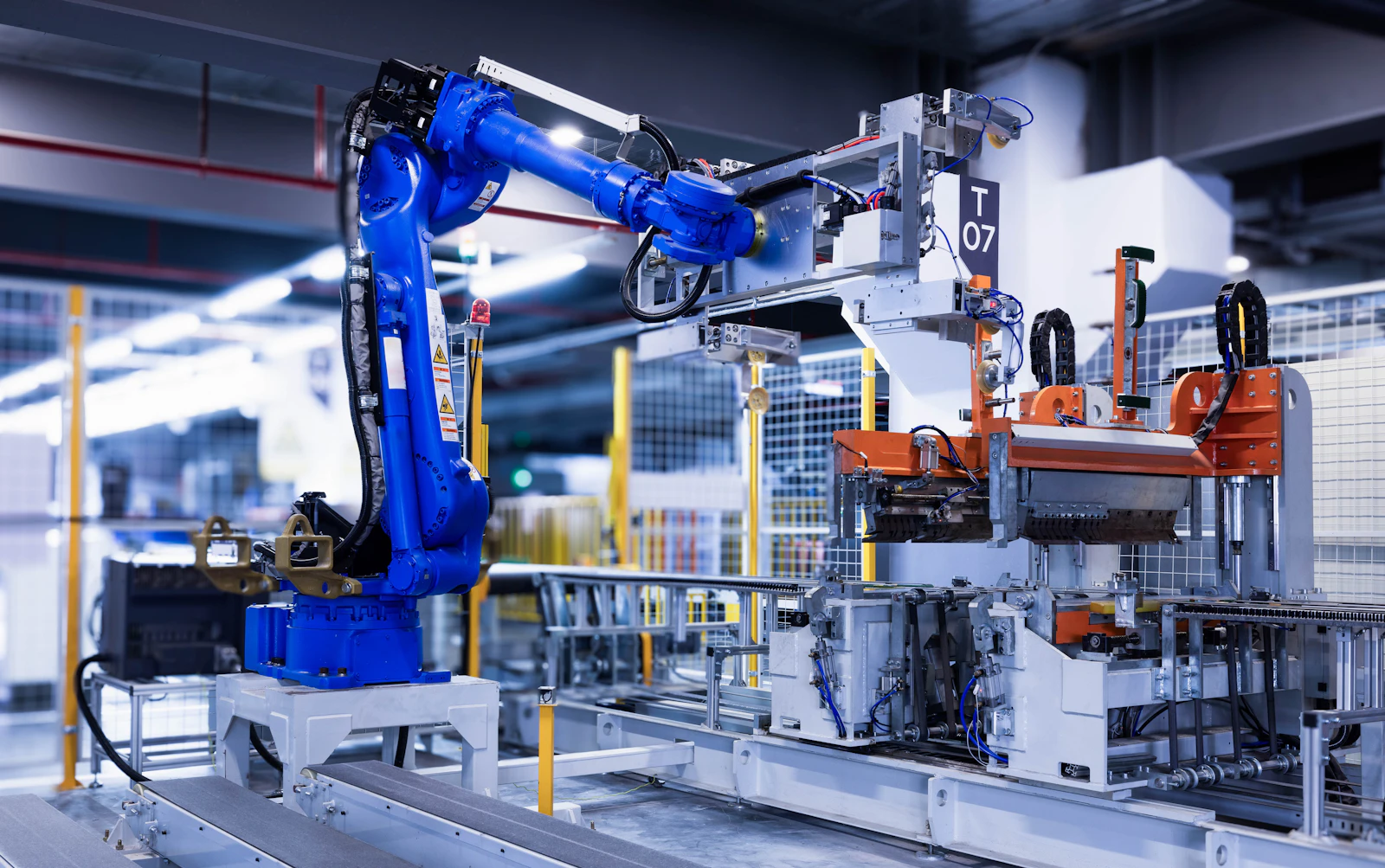
Camera, robot and handling architecture selected around your product, production rate and operating environment.
Application engineering
The robot arm is one part of the answer. Oxford Industrial Automation takes responsibility for the production interfaces required to make the cell work.
Robot selection
Speed alone does not choose the robot. Payload, reach, pose, product presentation, tooling, environment and downstream placement all matter.
Compact, fast planar motion for suitable component sorting, assembly and placement.
Explore this architecture ↗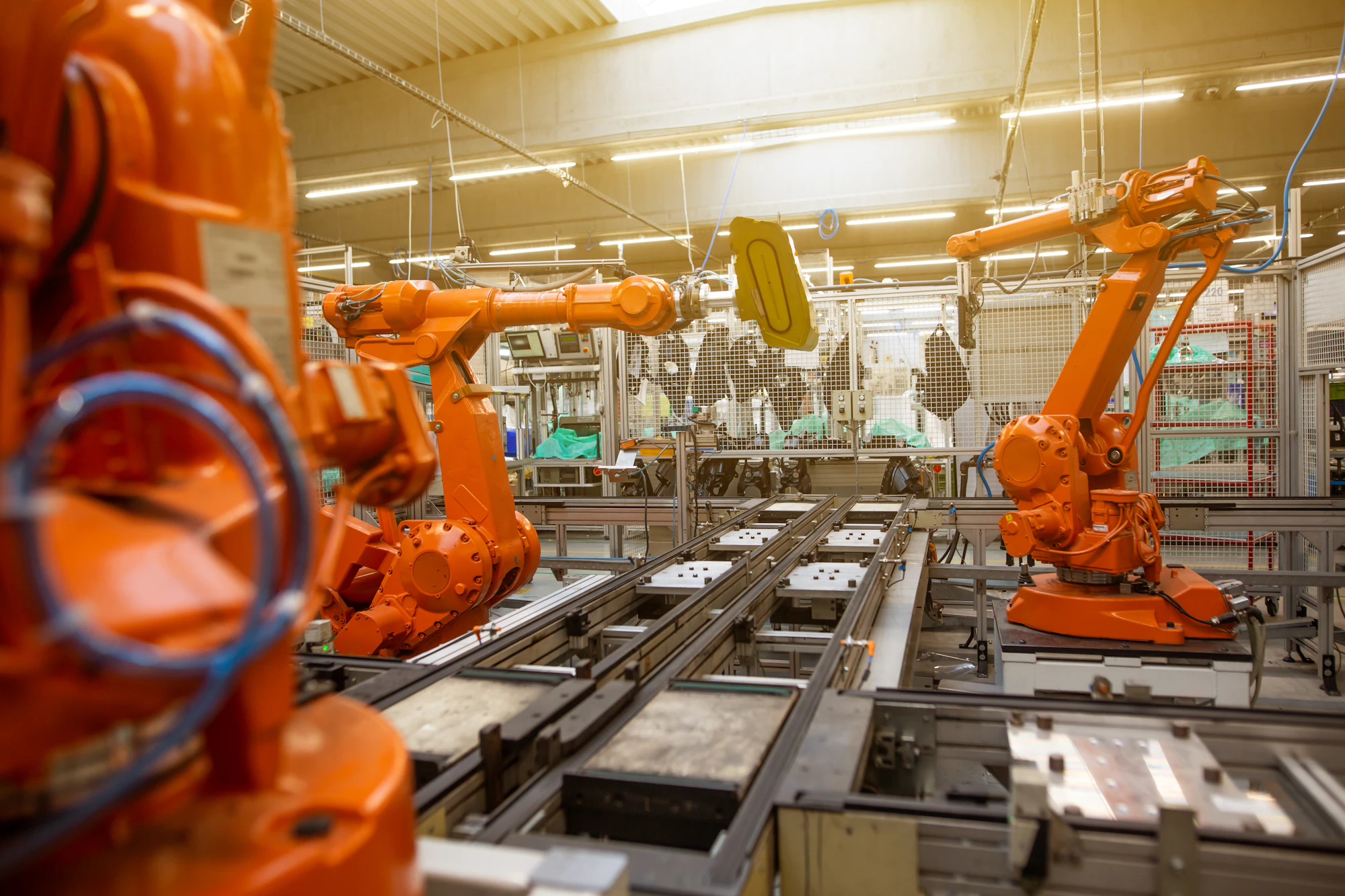
Rapid overhead handling for high-throughput tracked-conveyor applications.
Explore this architecture ↗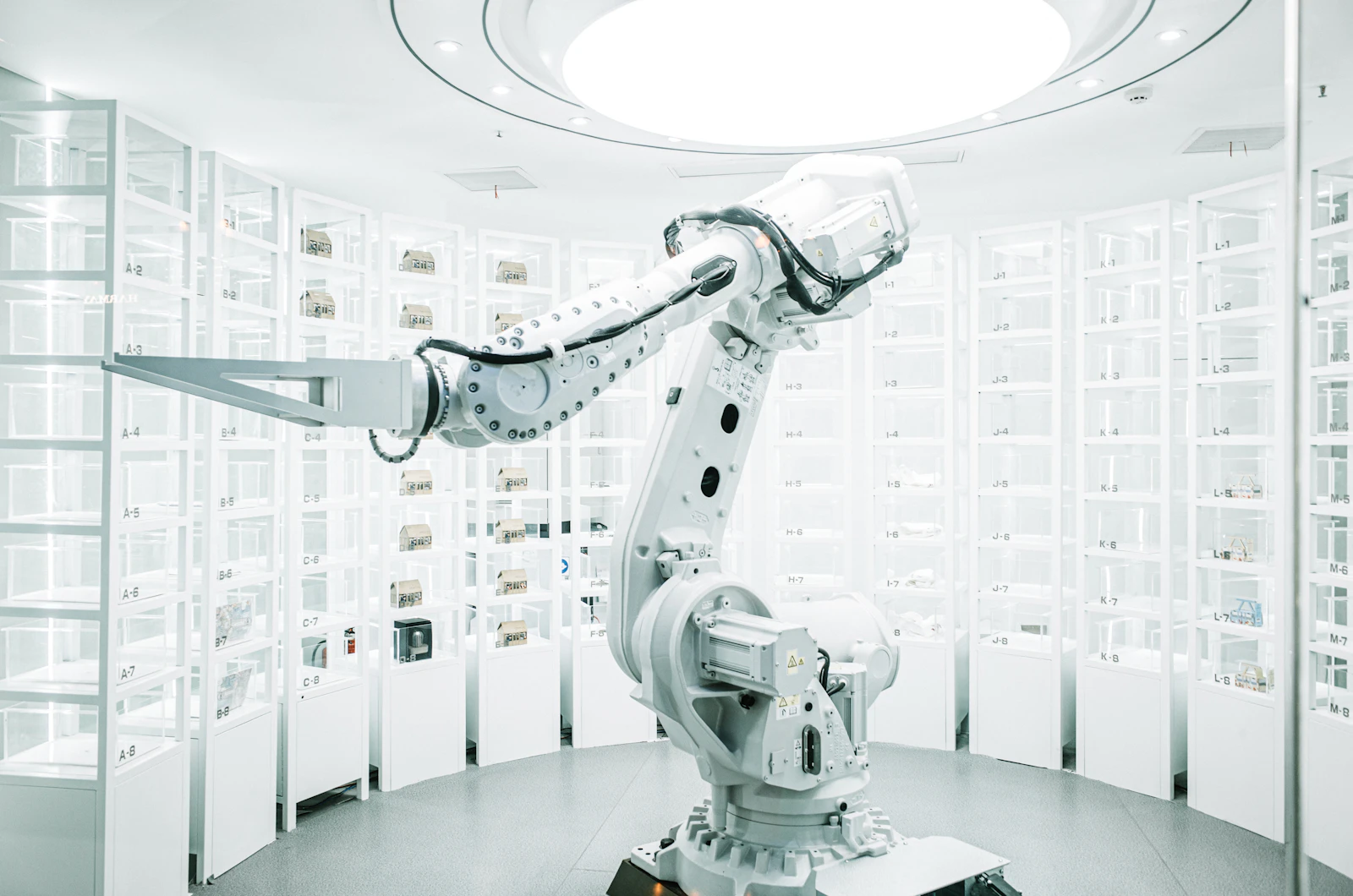
Flexible approach, orientation and viewpoint control for complex applications.
Explore this architecture ↗Production environments
The same core technologies are configured around very different product, hygiene, quality, speed and operating requirements.
Sort, orient and place unpackaged or packed products with application-specific hygiene and handling design.
Inspect packs, read codes, verify labels and load products into trays, cartons or downstream equipment.
Identify, inspect and orient components for assembly, kitting, machine loading or quality control.
Inspect moulded parts, separate variants, remove rejects and transfer products into controlled downstream flow.
Apply controlled inspection, identification and reject handling around defined quality and validation needs.
Identify items, choose destinations and route products through robotic or conveyor-based sortation.
Locate small components, verify assembly and support accurate placement into fixtures, trays or processes.
Automate repetitive visual decisions and product movement across mixed industrial production environments.
Focused production solutions
Explore the application, technology and planning guidance most relevant to your production problem.
How cameras, optics, lighting, processing and controls create inspection, identification and robot-guidance decisions.
Variable defectsDeep-learning-assisted inspection for natural variation, surface defects and complex appearance decisions.
Random partsDepth vision, pose estimation, gripping and collision-aware robot motion for randomly presented components.
Pack qualityAutomated checks for labels, date codes, barcodes, closures, fill, artwork and visible pack condition.
Existing linesAdd cameras, tracking, controls and confirmed rejection to suitable conveyors and production equipment.
Buyer resourcesCompare methods and robots, understand cost drivers and prepare a practical system specification.
What makes it reliable
A strong concept is based on representative products, real rejects, actual line timing and a defined response to uncertainty.
Good parts, known rejects, natural variation, different finishes, contamination and presentation extremes.
Exposure, processing, product travel, robot motion, gripping, placement, confirmation and recovery.
What must be detected, accuracy or confidence limits, allowable false decisions and test quantities.
No-read, missed pick, full reject bin, line stop, loss of product and safe restart behaviour.
Recipes, access, cleaning, changeover, diagnostics, training and agreed production support.
Sorting capacity depends on destination availability as well as image processing and motion. Include a full collection position, an unavailable conveyor and an uncertain classification in the concept before comparing a quoted rate.
For each item class, list the normal destination and any approved alternative. State which classifications must be held for review. A convenient spare bin is not automatically an acceptable destination if the production process depends on separation by product, batch or quality status.
As a hypothetical planning example, a flow of 30 items per minute delivers ten items during a 20-second destination interruption. That count is only the arriving quantity; it is not proof that a ten-item buffer is sufficient. The layout must also allow for items already in transit, permitted spacing, the restart sequence and how any backlog is cleared.
Follow identified items from imaging to their destinations while gaps, stops and restarts occur. Confirm the response when an item is removed, a pick fails or the collection position changes. An old decision must not be reassigned to the next physical item because the normal sequence was disturbed.
Report the destination reached, unresolved items and manual interventions alongside classification results. Compare the complete sequence using the intended mix and arrival pattern. The vision-guided sorting guide and exception-handling guidance help define the test boundary.
Questions
Start with the task and the product. The correct camera and robot follow from the production requirement.
A vision sorting system captures an image of each product, applies defined rules to identify its position, type, orientation or quality, and then controls a robot or reject device to route it to the correct destination.
Delta or parallel robots suit many high-speed conveyor applications, SCARA robots suit compact planar handling, and six-axis robots provide flexible approach and orientation. The product, cycle, payload, reach and placement determine the selection.
Often, subject to conveyor stability, space, product presentation, controls access, guarding and available pick or reject distance. A site and application review establishes what can be retained.
Product dimensions and weight, photos or video, good and reject samples, line speed, target output, available layout, upstream and downstream equipment, formats and the decision the system must make.
Oxford Industrial Automation focuses on the complete application: vision, lighting, robot, tooling, conveyor interfaces, reject handling, controls, safeguarding, integration, commissioning and training as required by the project.
Start with the production task
Use the project brief form, or email product photos or video with the target output, current layout and required decision. We will define the next technical step.
Machine vision projects can have similar cameras but very different success criteria. Define what must be decided about each item and what physical or recorded action follows, then choose the optical and handling approach around that task.
Use an agreed defect or measurement definition with good, bad and borderline samples. Identify the surfaces visible in the proposed arrangement and any features requiring another test. Record missed faults and unnecessary rejects separately; a single overall success percentage can hide an unacceptable type of error.
A code read or recognised appearance must be compared with the required identity or job where that matters. Define no-read, wrong-identity and duplicate-result cases. Reading text successfully and proving that it is the correct text for the current product are separate parts of the specification.
Track the item between the camera and the robot or diversion point. Include conveyor motion, product spacing and the time available for the required movement. Count correctly delivered items at each destination and challenge uncertain classifications, failed picks and a full collection position.
Keep representative product differences, lighting conditions and operating states in the trial. Reserve challenge examples for checking the proposed decision, and document recipe changes. Where an AI-assisted method is considered, compare its results against the same acceptance categories and handling requirements as the alternative approach.