A specialist website by Oxford Industrial Automation

UK robot & vision integration · 01865 416830

Existing line improvement

Machine vision system retrofits

Add inspection, identification, robot guidance or rejection to suitable existing equipment. We assess product presentation, line controls, available space, timing, guarding and ownership of every interface before defining the retrofit scope.

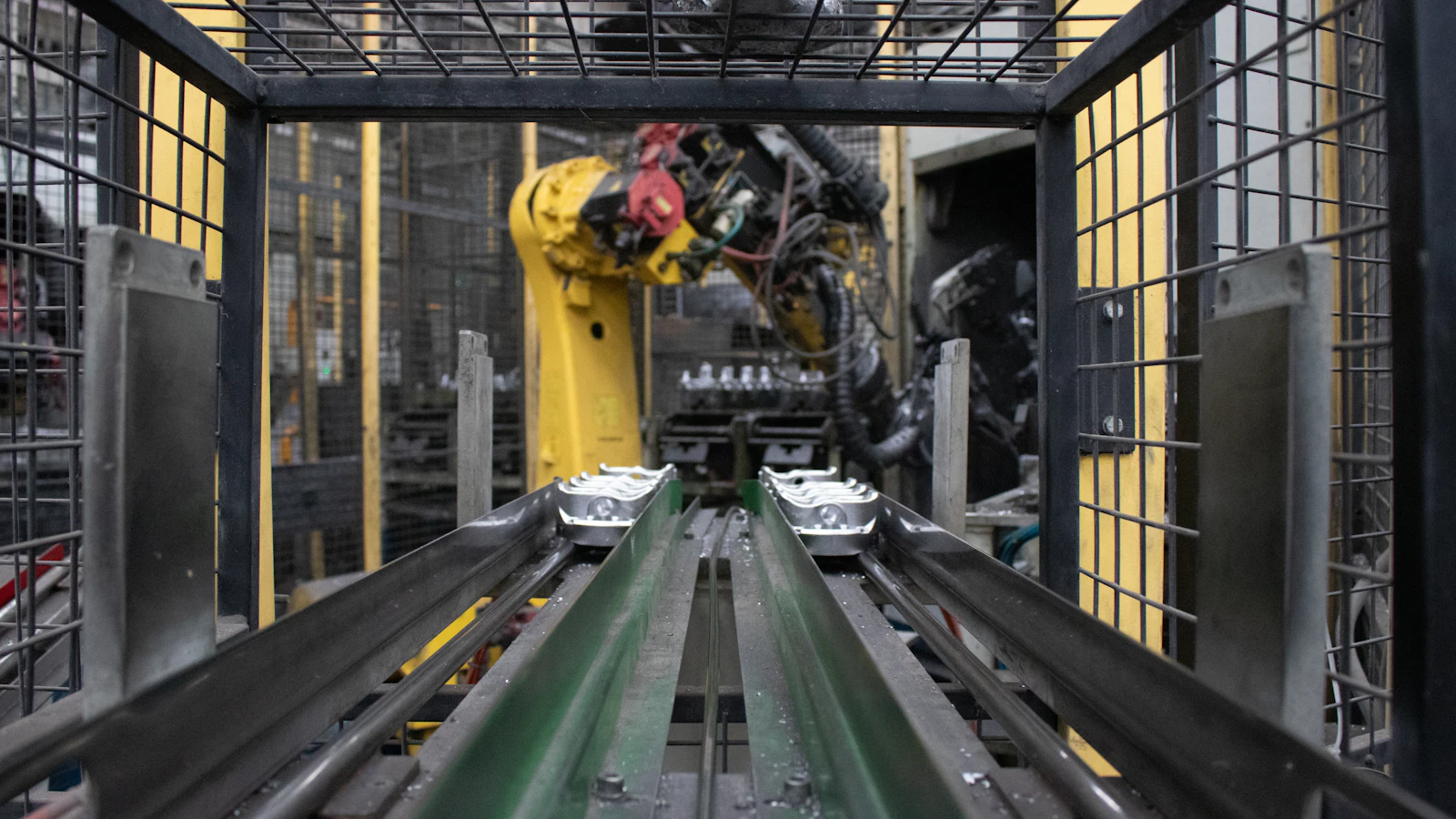
A yellow industrial robot behind metal components on guarded conveyor tracks.
Starting pointExisting equipment
ReviewControls and mechanics
GoalTargeted automation

Direct answer

Can machine vision be added to an existing production line?

Often, provided the line offers stable product presentation, usable inspection distance, suitable controls access and enough space for cameras, lighting, rejection and guarding. A retrofit survey identifies what can be retained and what must change.

01 / Site evidence

Survey the line in production

Drawings are useful, but real product flow reveals vibration, pitch variation, reflections, accumulation, operator interaction and fault recovery. The survey defines physical, electrical, controls and safety constraints.

  • Available camera and reject distance
  • Conveyor stability and speed variation
  • PLC signals, encoder and network access
  • Guarding, access and operator workflow
02 / Controlled change

Protect production during integration

Retrofit work is planned around installation access, line downtime, commissioning products and fallback arrangements. New equipment must work with the retained machine rather than creating an isolated subsystem.

  • Defined interface responsibility
  • Installation and commissioning plan
  • Recipe and changeover integration
  • Training, diagnostics and support

Decision to action

Engineer the complete production loop.

Each stage is designed against representative products, real timing and the required physical outcome.

01

Survey

Capture the line, products, controls and constraints.

02

Trial

Prove the difficult imaging or handling risk.

03

Integrate

Install the mechanical, electrical and control scope.

04

Prove

Test normal, reject, fault and recovery conditions.

Application opportunities

Where this capability can fit.

Final suitability follows from the product, presentation, rate, environment and acceptance criteria.

Inspection station retrofits
Code-reading additions
Automated reject upgrades
Robot guidance on retained conveyors
Legacy camera replacement
Controls and traceability integration

Questions manufacturers ask

Clear answers before specification.

Use these answers to frame the first application review and the evidence needed next.

Does the existing conveyor need to be replaced?

Not automatically. Its stability, speed control, tracking accuracy, condition and available layout determine whether it can be retained or needs modification.

Can a new vision system communicate with an older PLC?

Often, but the available I/O, communications, program access and supportability must be confirmed. A defined interface can use hardwired signals or suitable industrial communications.

How much production downtime is required?

It depends on the mechanical and control scope. Survey, off-line build, simulation and pre-testing are used to reduce on-site work, with the installation plan agreed around production constraints.

Can the retrofit keep existing recipes?

Where the controls and recipe structure support it, new inspection settings can be linked to existing formats. Ownership, version control and changeover behaviour are agreed before implementation.

Start with the production task

Show us what the system needs to see and move.

Use the project brief form, or email product photos or video with the target output, current layout and required decision. We will define the next technical step.

Project brief