A specialist website by Oxford Industrial Automation

UK robot & vision integration · 01865 416830

Flexible robot guidance

Six-axis robot vision applications

Use six-axis motion where the application needs flexible approach angles, reorientation, inspection from several viewpoints or access around machines and fixtures. Vision can be fixed, robot-mounted or combined.

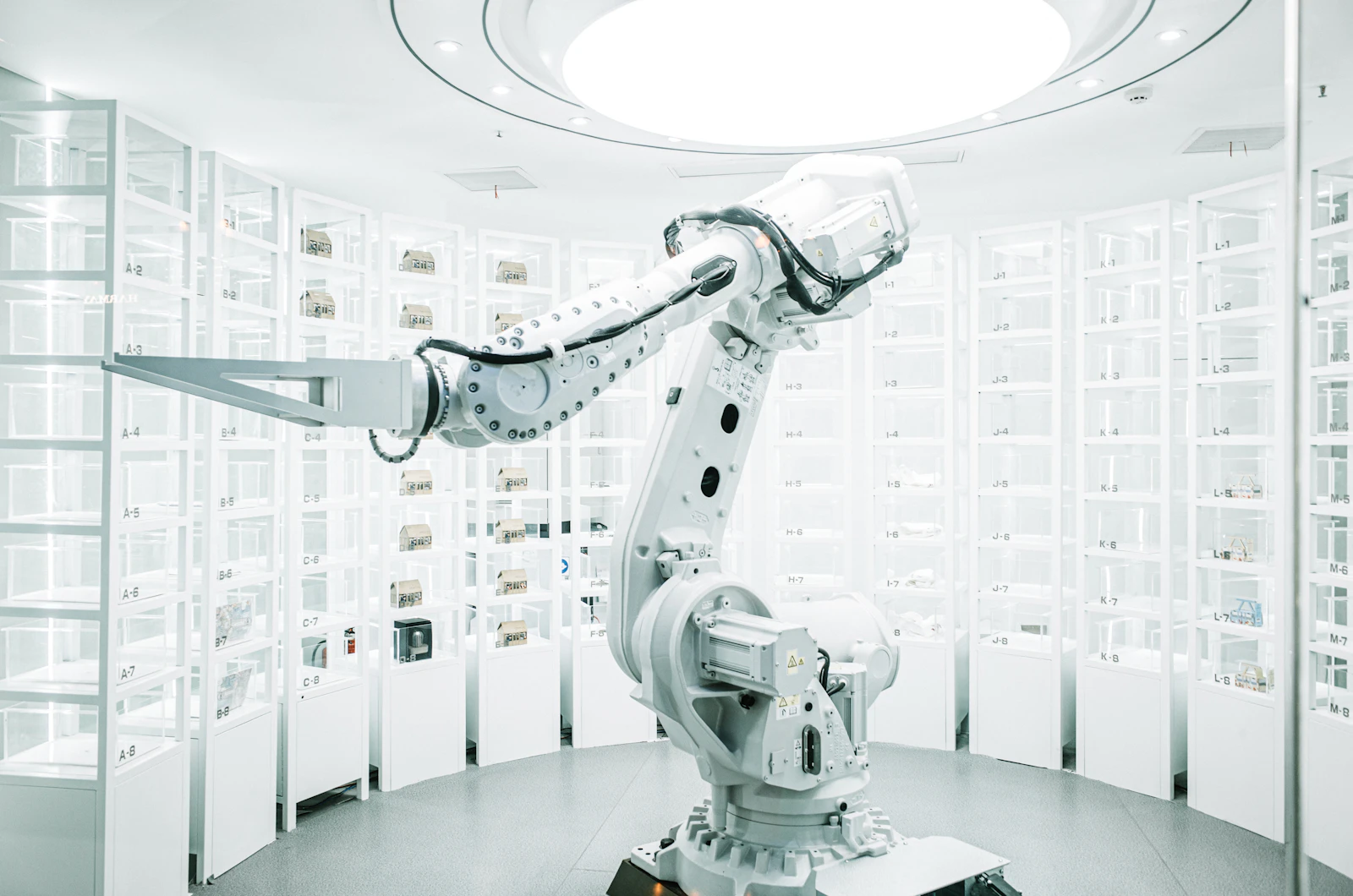
A white industrial robot arm in front of display shelves.
FreedomFlexible approach, orientation and path around the product
VisionFixed overview, eye-in-hand or multi-camera inspection
TasksHandling, machine loading, inspection, assembly and picking
01 / Engineering focus

Vision expands flexible robot handling

A fixed camera can give an overview of the work area, while a camera on the robot can refine the approach or inspect several faces. The arrangement is selected around visibility, cycle time and calibration stability.

  • Random component and bin-picking assessment
  • Machine and fixture loading
  • Multi-face product inspection
  • Complex orientation and controlled insertion
  • Mixed-format handling with recipe control
02 / Engineering focus

Motion planning is part of the cell

Reach on a datasheet is not the same as usable access. Robot pose, wrist alignment, tooling length, singularities, fixtures and guarding all shape the working envelope.

  • 3D layout and reach assessment
  • Tool centre point and payload definition
  • Collision-aware approach and retreat paths
  • Machine, conveyor and safety-system interfaces

System sequence

Engineer the complete decision loop.

Every stage is tested against the product, timing, interfaces and agreed response.

01

Observe

Choose fixed, moving or combined camera viewpoints.

02

Solve

Calculate product pose and a valid tool approach.

03

Move

Plan a reachable, collision-aware path and orientation.

04

Verify

Confirm grip, placement or inspection outcome.

Typical applications

Where this capability can fit.

Final suitability and performance are confirmed only after review of the complete production application.

3D robot guidance
Eye-in-hand inspection
Complex part orientation
Machine loading
Bin-picking assessment
Multi-view inspection

Application questions

What manufacturers ask.

These answers provide a starting point. Product trials and line data determine the project specification.

What is eye-in-hand vision?

The camera is mounted on the robot, allowing it to move to different viewpoints or refine a final approach. The camera-to-tool relationship must be calibrated and protected.

Can a six-axis robot inspect several sides of a product?

Yes. The robot can present the product to fixed cameras or move a camera around the product, subject to required resolution, access and cycle time.

Is six-axis always more flexible than SCARA or delta?

It offers greater orientation freedom, but may not be the most direct architecture for every high-speed planar task. Selection is based on motion, payload, speed, access and total cell needs.

Start with the production task

Show us what the system needs to see and move.

Use the project brief form, or email product photos or video with the target output, current layout and required decision. We will define the next technical step.

Project brief