Food & drink
Sort, orient and place unpackaged or packed products with application-specific hygiene and handling design.
A specialist website by Oxford Industrial Automation
UK robot & vision integration · 01865 416830
Industry applications
Product, process, hygiene, quality, operator access and downstream flow shape the cell. We adapt the imaging, handling and control architecture to the actual manufacturing context.

Production sectors
Every system is specified against the product, decision, rate, environment and operating requirement.
Sort, orient and place unpackaged or packed products with application-specific hygiene and handling design.
Inspect packs, read codes, verify labels and load products into trays, cartons or downstream equipment.
Identify, inspect and orient components for assembly, kitting, machine loading or quality control.
Inspect moulded parts, separate variants, remove rejects and transfer products into controlled downstream flow.
Apply controlled inspection, identification and reject handling around defined quality and validation needs.
Identify items, choose destinations and route products through robotic or conveyor-based sortation.
Locate small components, verify assembly and support accurate placement into fixtures, trays or processes.
Automate repetitive visual decisions and product movement across mixed industrial production environments.
Define the evidence
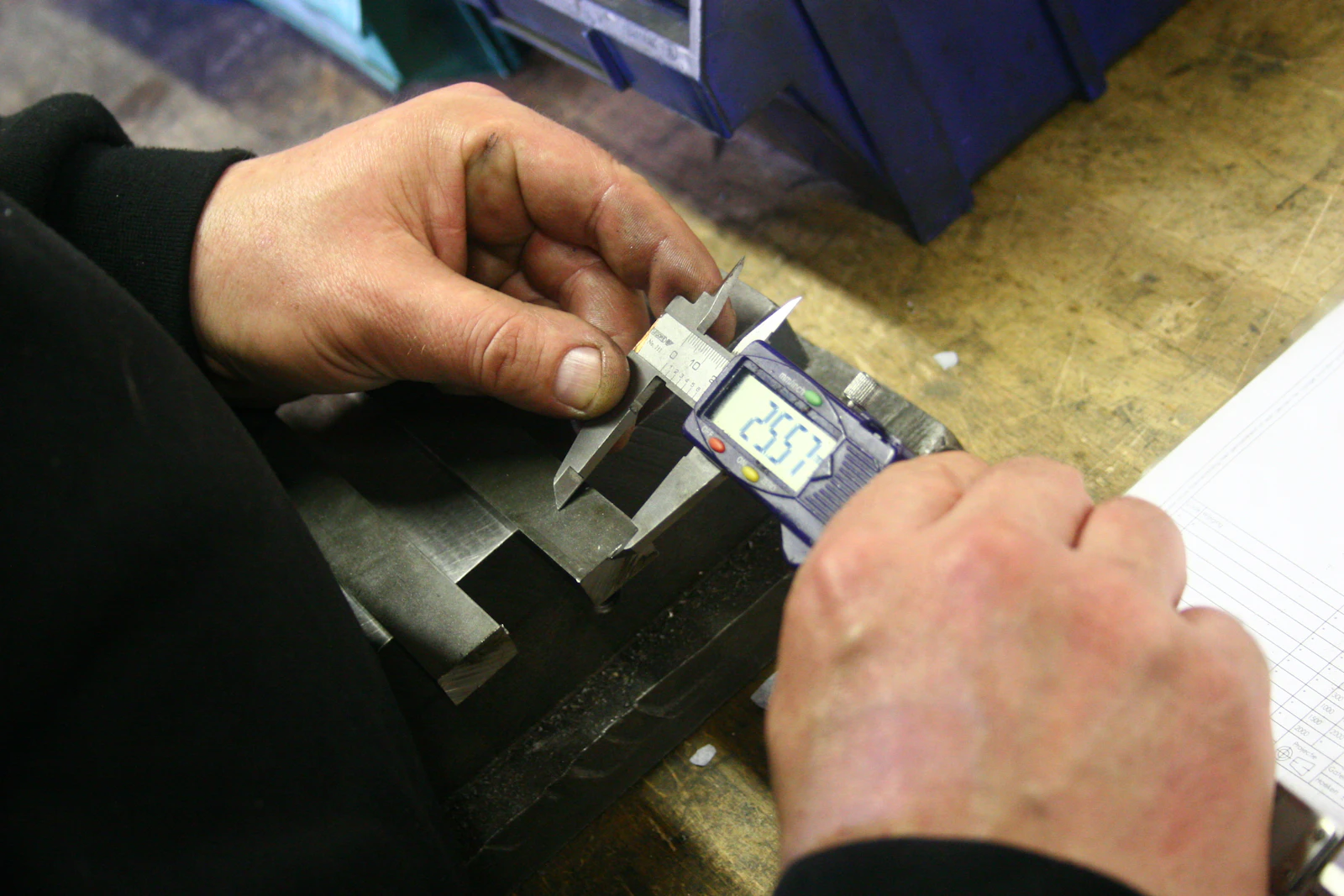
We translate the production requirement into visible features, measurable limits, routing rules and physical containment.
Questions
Share your current process and product; the architecture follows from the real requirement.
The core camera and software principles can transfer, but lighting, handling, hygiene, environmental protection, records and acceptance needs are application-specific.
Often, where its condition, controls, layout, speed and safety interfaces support the required system. An integration review identifies what can be retained or adapted.
Yes where flexible automation creates a sound operational case. Format range, changeover, recipe management and tooling strategy are considered from the start.
Start with the production task
Use the project brief form, or email product photos or video with the target output, current layout and required decision. We will define the next technical step.