A specialist website by Oxford Industrial Automation

UK machine vision & robot integration · 01865 416830

Industrial vision integration

Industrial machine vision systems for UK manufacturers

Turn an image into a controlled production decision. Oxford Industrial Automation integrates cameras, optics, lighting, software, robots, PLC controls and reject handling as one application-specific machine vision system.

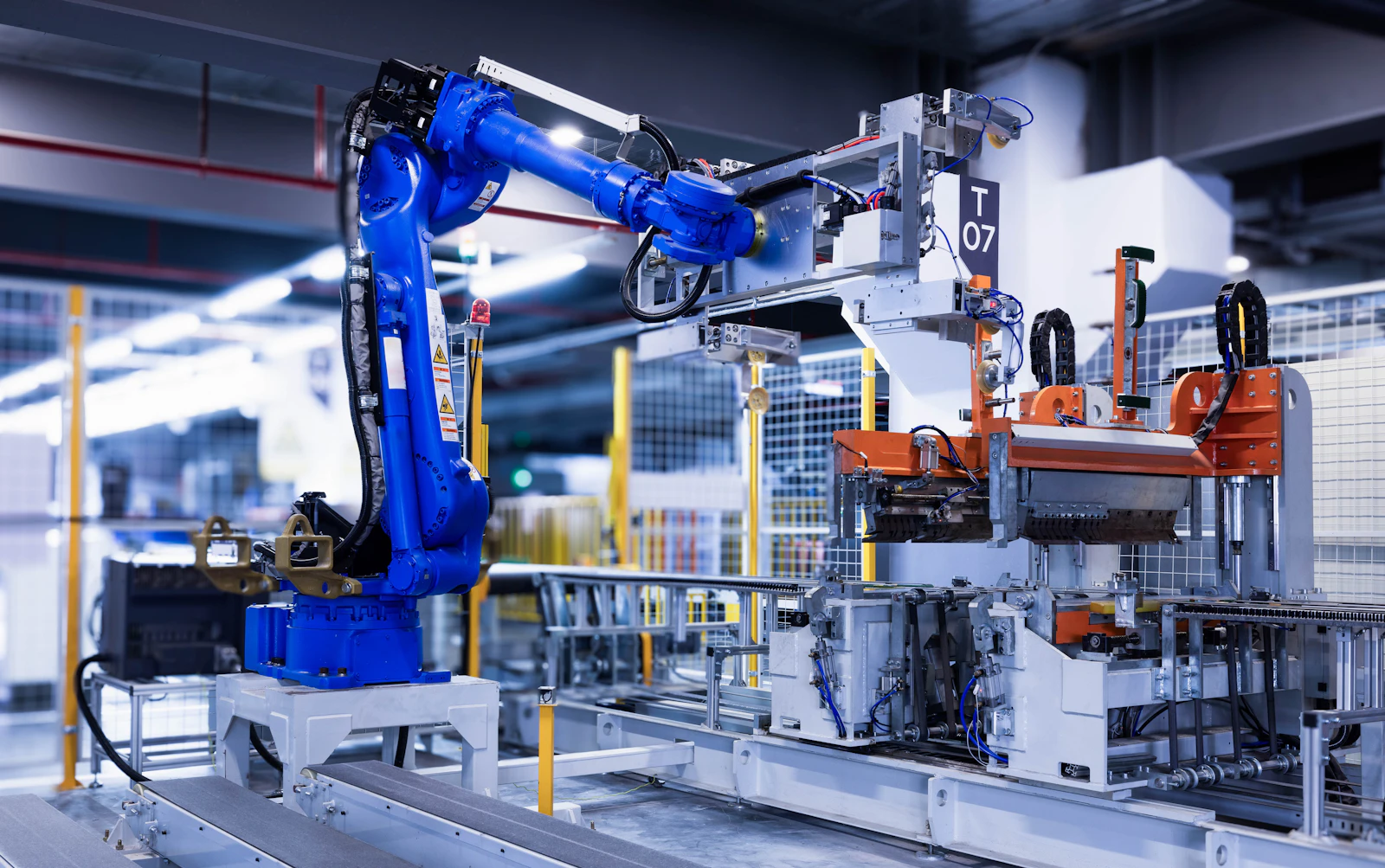
A blue industrial robot arm beside a production fixture.
InspectPresence, defects, dimensions, assembly and packaging
IdentifyBarcode, Data Matrix, OCR, OCV and product classification
GuideRobot coordinates, orientation, tracking and placement

Direct answer

What does an industrial machine vision system do?

It creates a repeatable image, extracts the feature that matters, makes a defined decision and sends a usable result to the production equipment. That result may pass or reject a product, read a code, measure a feature, locate a component or guide a robot.

01 / Define the decision

Start with the production outcome, not the camera

A successful specification describes what the system must decide, the smallest meaningful feature, the acceptable variation, the available cycle time and what must physically happen next. Resolution, lens, processor and software follow from that evidence.

  • Good, reject and uncertain product states
  • Required field of view, accuracy and repeatability
  • Line speed, product spacing and trigger conditions
  • Pass, reject, route, stop, record or robot-guidance output
  • Operator access, recipes and recovery requirements
02 / Engineer the image

Stable lighting and geometry make the algorithm dependable

Many inspection problems are solved first with optics and illumination. Reflections, contrast, motion blur, depth of field and background variation are controlled so the required feature is visible before rule-based tools or AI are applied.

  • Area-scan, line-scan, smart-camera and PC-based architectures
  • Monochrome, colour, 2D and 3D imaging
  • Backlight, bright-field, dark-field, diffuse and polarised lighting
  • Calibration from image coordinates to machine or robot coordinates

Decision pathway

Image, decide and act within the production cycle.

The useful system includes every interface between the product entering the field of view and the confirmed physical response.

01

Capture

Trigger a sharp, repeatable image under controlled illumination.

02

Analyse

Locate, measure, identify or classify the required feature.

03

Communicate

Transfer the result, coordinates and status to the PLC or robot.

04

Confirm

Verify the pick, placement, reject or containment outcome.

Application opportunities

One technology family, several production outcomes.

The architecture changes with the feature, product presentation, rate, environment and consequence of a wrong decision.

Automated optical inspection
Robot vision guidance
Barcode and OCR verification
Dimensional measurement
Colour and product sorting
Traceability and image records

Questions manufacturers ask

Clear answers before specification.

Use these answers to frame the first application review and the evidence needed next.

What is the difference between machine vision and computer vision?

Computer vision is the broader field of extracting information from images. Machine vision applies those methods inside an engineered industrial system that also controls lighting, triggering, calibration, line interfaces, reject handling and recovery.

Should a project use 2D or 3D vision?

2D vision is usually the simpler choice for visible features in a controlled plane. 3D becomes useful when height, depth, overlap, random pose or shape is essential to the decision. Representative trials should decide the method.

Can machine vision be integrated into an existing production line?

Often yes. A retrofit review checks presentation, lighting control, line speed, available distance, PLC interfaces, reject timing, guarding and operator access before confirming what can be retained.

What information is needed for an initial review?

Send product dimensions, good and reject examples, images or video, line speed, required decision, available layout, control interfaces and the physical response expected after the decision.

Start with the production evidence

Show us the product, the decision and the production cycle.

Send representative images or video, good and reject samples, target output and the required physical response. We will define the right next technical step.

Project brief