A specialist website by Oxford Industrial Automation

UK robot & vision integration · 01865 416830

Variable defect detection

AI vision inspection systems

Apply machine-learning vision where acceptable and defective products cannot be separated reliably by a short set of fixed rules. We connect image capture, model performance, controls, evidence and reject handling into the production process.

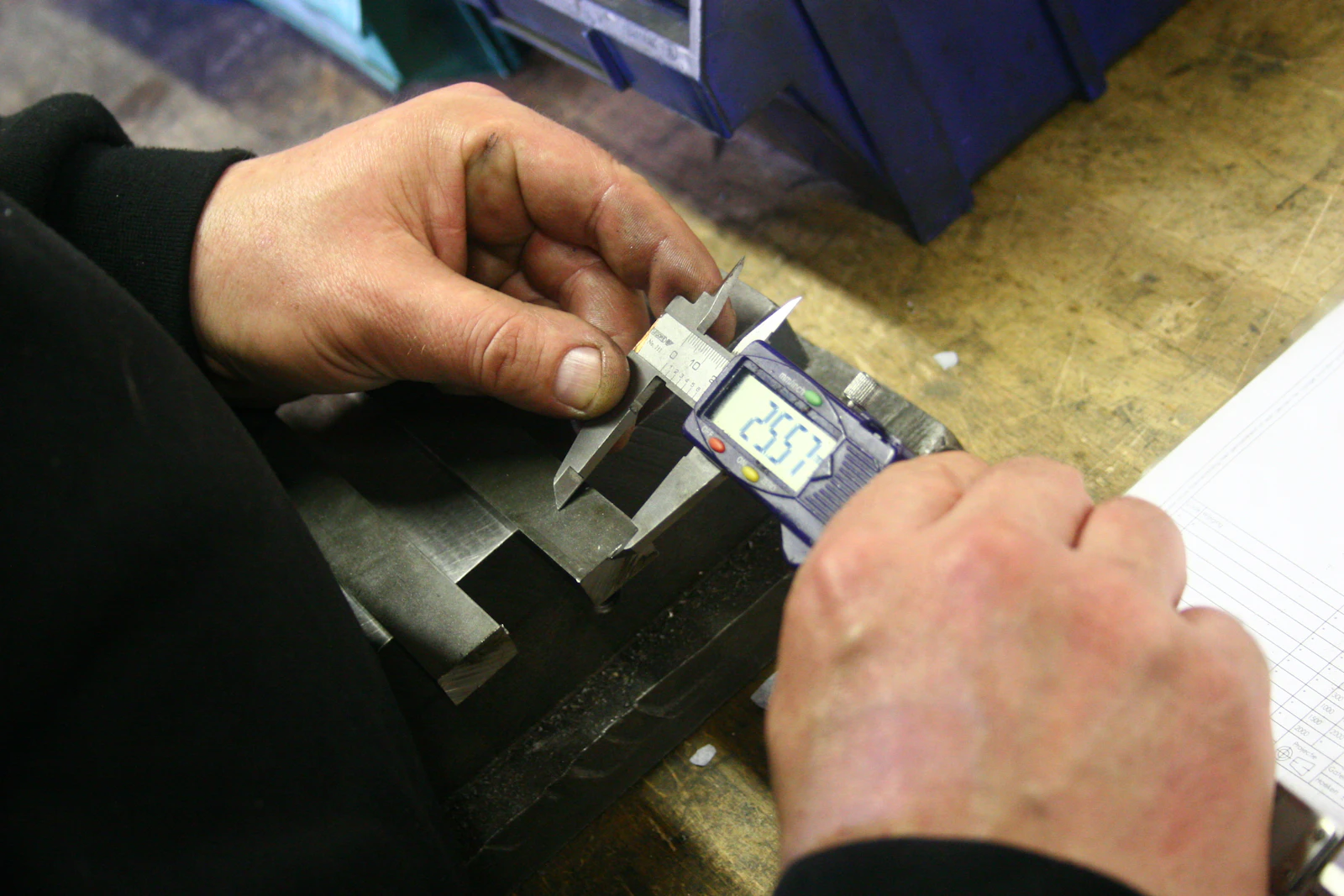
Hands using digital calipers on a metal component.

Manual inspection shown: defect classes and acceptance boundaries must be defined before automation.

MethodAI and rules-based
EvidenceRepresentative images
ResponseReject, stop or record

Direct answer

When should AI be used for vision inspection?

AI vision is most useful when the inspection must recognise complex appearance variation rather than measure one clear edge, dimension or contrast threshold. Rules-based tools remain appropriate for predictable checks; many production systems combine both methods.

01 / Training evidence

Define good, defective and uncertain product

Model quality depends on the image set and acceptance rules. The development set should cover normal variation, known defects, borderline cases, product formats and environmental conditions that the system will encounter.

  • Representative good and reject samples
  • Defect categories and severity
  • Borderline and uncertain decisions
  • Format, batch and environmental variation
02 / Production control

Turn a classification into a controlled response

The inspection result must remain associated with the correct product and drive a verified physical action. Thresholds, no-read behaviour, audit records and model-change control are agreed for the application.

  • Pass, fail and review thresholds
  • Reject timing and confirmation
  • Image and result records where required
  • Controlled model updates and acceptance testing

Decision to action

Engineer the complete production loop.

Each stage is designed against representative products, real timing and the required physical outcome.

01

Capture

Create stable images of the required feature.

02

Learn

Develop the model from representative examples.

03

Validate

Challenge normal, defect and borderline cases.

04

Control

Apply the result to the correct product and action.

Application opportunities

Where this capability can fit.

Final suitability follows from the product, presentation, rate, environment and acceptance criteria.

Surface defect classification
Natural-product quality grading
Assembly anomaly detection
Packaging appearance checks
Contamination or foreign-object checks
Complex variant recognition

Questions manufacturers ask

Clear answers before specification.

Use these answers to frame the first application review and the evidence needed next.

Is AI always better than conventional machine vision?

No. A deterministic tool is often preferable for clear measurements, code reading or presence checks. AI is considered where the appearance varies too much for a practical fixed-rule approach.

How many training images are required?

There is no reliable universal number. The important issue is whether the image set represents the real variation, defect range and difficult edge cases. Trials determine the evidence needed.

Can AI inspection explain why a product failed?

Systems can retain the image, result, class and confidence information, but the available explanation depends on the chosen method. Production acceptance criteria should not rely on an unexplained score alone.

Can AI vision control automated rejection?

Yes, when the result is correctly tracked to the product and the reject mechanism, confirmation and exception handling are engineered as part of the system.

Start with the production task

Show us what the system needs to see and move.

Use the project brief form, or email product photos or video with the target output, current layout and required decision. We will define the next technical step.

Project brief