A specialist website by Oxford Industrial Automation

UK robot & vision integration · 01865 416830

Recognition & routing

Vision identification and traceability

Identify products, packs or components from visible features, printed characters or machine-readable codes, with barcode reading, code-content validation and image or data traceability where required. The result can select a route, load a recipe, verify identity or create a production record.

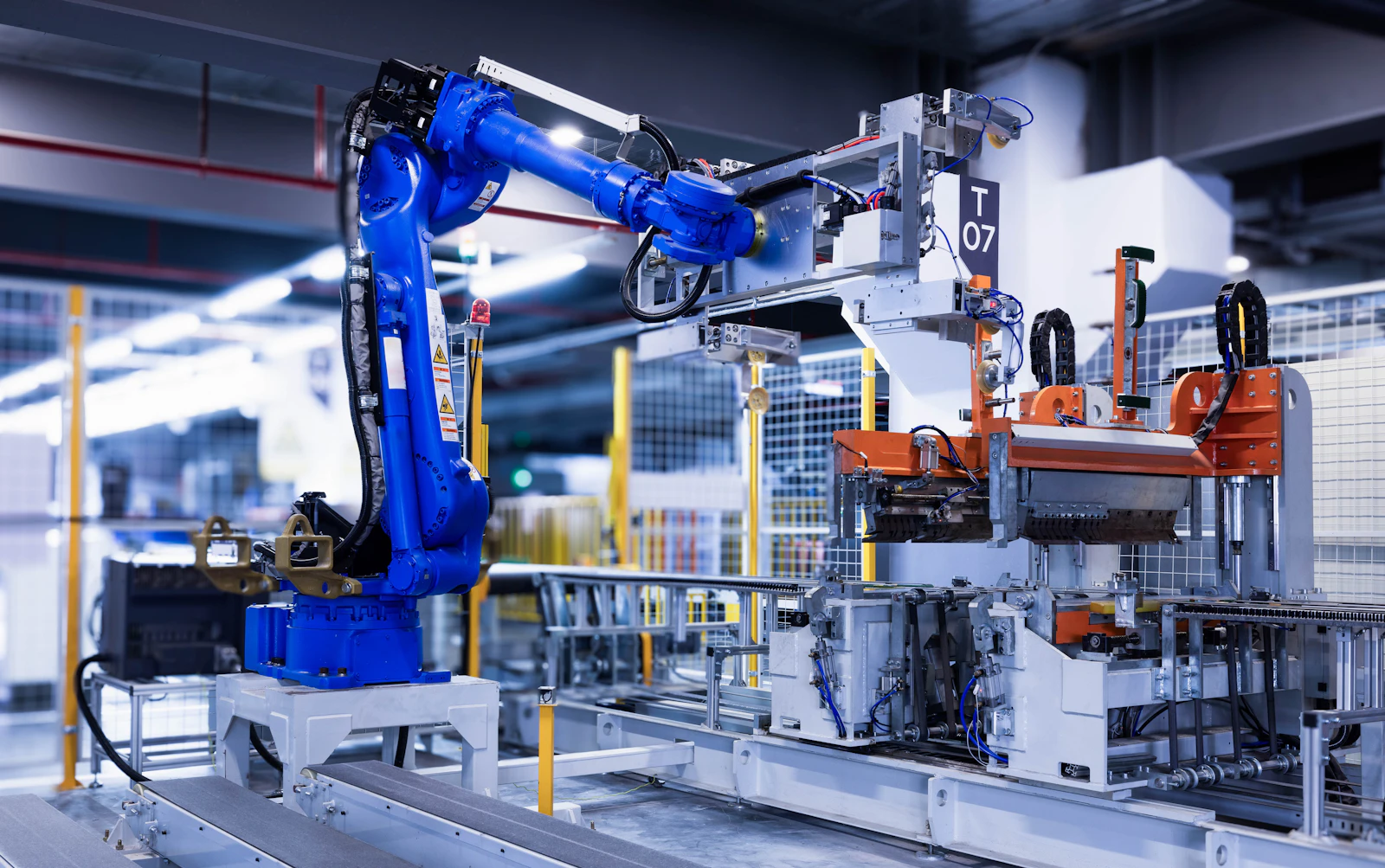
A blue industrial robot arm beside a production fixture.
Read1D codes, 2D codes, text, marks or product features
VerifyIdentity, content, match, format and legibility
ConnectPLC, robot, line control or production database

Direct answer

What can vision identification verify?

Vision can read 1D barcodes and validate their content, QR and Data Matrix codes, apply OCR or OCV to printed characters, compare a code with the active product recipe and link the trusted result to routing, robot selection or a production record.

01 / Engineering focus

Choose the right identification method

The visible information, print quality, reading distance, motion and required response determine whether the application needs a smart reader, machine vision camera, OCR tool or a combined approach.

  • Barcode and 2D code reading with content validation
  • Optical character recognition and verification
  • Product type or variant recognition
  • Logo, colour and feature-based identification
  • Code-to-product match checking
02 / Engineering focus

Use identity to control the next action

Read results can follow the individual item through the line, select a destination, call a robot recipe or verify that the correct product reaches the correct process.

  • Route selection and lane control
  • Recipe or tooling selection
  • Duplicate, no-read and mismatch handling
  • Result, timestamp and selected image transfer to agreed control or data systems

System sequence

Engineer the complete decision loop.

Every stage is tested against the product, timing, interfaces and agreed response.

01

Mark

Review code, text or distinguishing product features.

02

Capture

Control focus, exposure and illumination across the reading area.

03

Verify

Apply no-read, mismatch and duplicate handling rules.

04

Route

Link the trusted result to the required production action.

Typical applications

Where this capability can fit.

Final suitability and performance are confirmed only after review of the complete production application.

Barcode and Data Matrix reading
OCR and OCV
Variant recognition
Identity-led routing
Product-to-code matching
No-read containment

Application questions

What manufacturers ask.

These answers provide a starting point. Product trials and line data determine the project specification.

Can a vision system read codes while products are moving?

Yes when code size, contrast, motion, depth variation, lighting and exposure are suitable. Line speed and reading geometry are assessed together.

What is the difference between OCR and OCV?

OCR interprets characters, while OCV checks that expected characters are present and formed acceptably. The right method depends on whether the system must discover unknown text or verify known content.

Is barcode reading the same as ISO/IEC barcode verification?

No. Reading and checking code content do not establish formal print-quality grading. A compliant verifier and the applicable ISO/IEC method must be specified when barcode verification or grading is required.

Can read results control a robot destination?

Yes. A validated identity can be associated with the tracked item and used to choose a robot program, placement location, lane or reject decision.

Start with the production task

Show us what the system needs to see and move.

Use the project brief form, or email product photos or video with the target output, current layout and required decision. We will define the next technical step.

Project brief