A specialist website by Oxford Industrial Automation

UK robot & vision integration · 01865 416830

Robot architecture

SCARA robot vision sorting systems

SCARA robots combine fast planar motion with a compact footprint for suitable pick, orient, assemble and place tasks. We assess reach, payload, inertia, vertical stroke, tool access and vision timing against the full cycle.

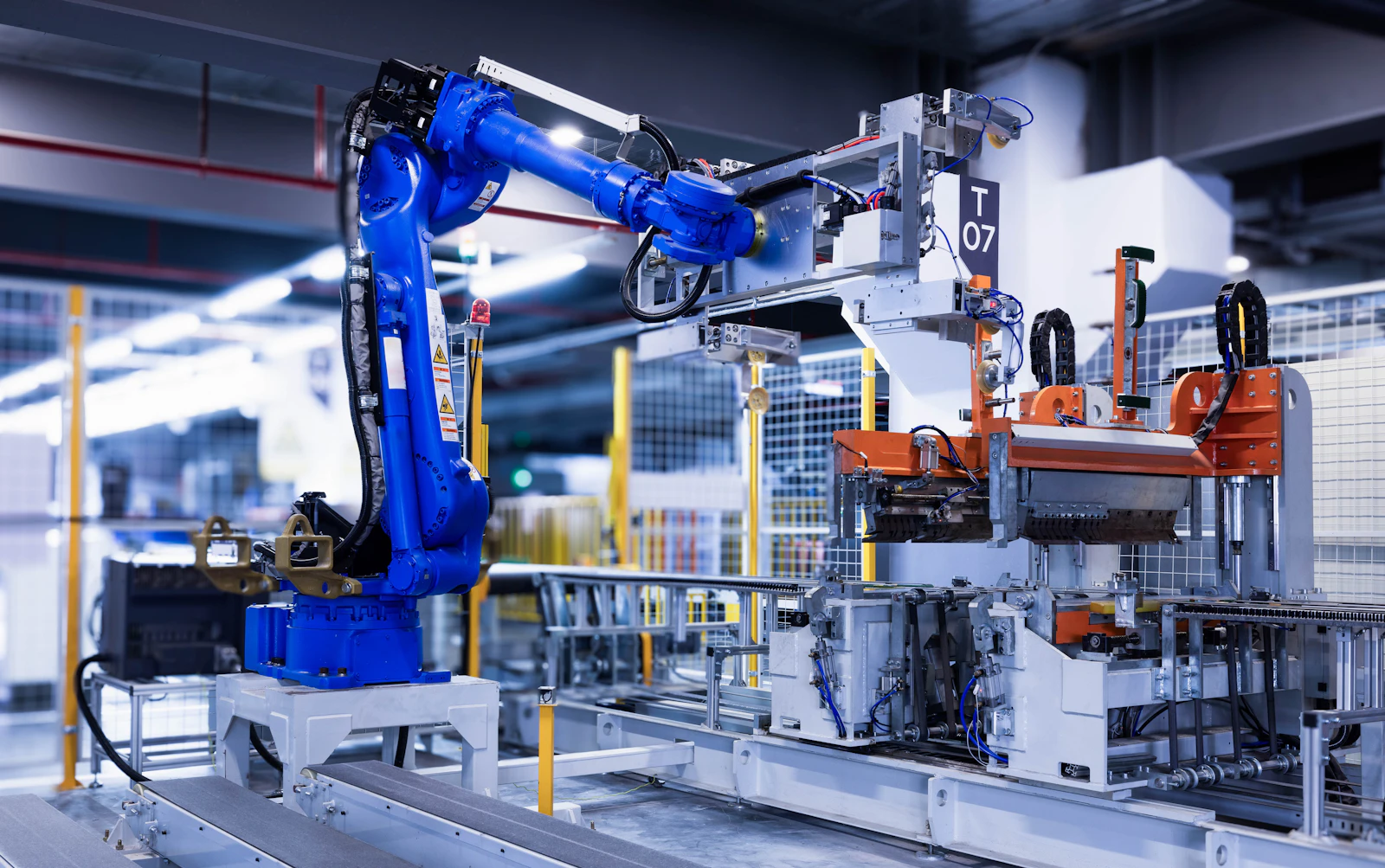
A blue industrial robot arm beside a production fixture.
MotionFast horizontal movement with vertical and rotary action
FitCompact cells, fixtures, trays and indexed or tracked conveyors
SelectionReach, payload, inertia, stroke, speed and environment
01 / Engineering focus

Where SCARA architecture can fit

SCARA platforms are often effective where the task is predominantly horizontal, placement is from above and the required orientation can be achieved about the vertical axis.

  • High-speed component sorting
  • Tray, fixture and pocket loading
  • Small-part assembly and transfer
  • Vision-guided pick from controlled presentation
  • Inspection and reorientation between processes
02 / Engineering focus

Specify the complete moving payload

Robot payload must include the gripper, adapters, sensors, services and product. Acceleration limits and inertia can be as important as the nominal mass.

  • Tool mass and centre of gravity
  • Product retention during acceleration
  • Vertical stroke and approach clearance
  • Cable and pneumatic service routing

System sequence

Engineer the complete decision loop.

Every stage is tested against the product, timing, interfaces and agreed response.

01

Reach

Confirm every pick, safe approach and placement position.

02

Payload

Include tooling, services, product and dynamic inertia.

03

Cycle

Model vision, travel, grip, settle and release time.

04

Integrate

Connect fixtures, guarding, controls and recovery.

Typical applications

Where this capability can fit.

Final suitability and performance are confirmed only after review of the complete production application.

Fast planar pick and place
Component orientation
Tray loading
Small assembly
Vision-led sorting
Compact automation cells

Application questions

What manufacturers ask.

These answers provide a starting point. Product trials and line data determine the project specification.

When is a SCARA robot preferable to a six-axis robot?

A SCARA can be attractive when the task is largely planar, the access is from above and compact high-speed motion is the priority. A six-axis robot offers more orientation and approach freedom.

Can a SCARA track a moving conveyor?

Yes on suitable platforms. The full solution requires encoder feedback, product queueing, calibrated coordinates and sufficient pick time within the robot envelope.

Can SCARA systems include machine vision inspection?

Yes. Vision can guide the pick, verify the product before handling or inspect the part at a controlled station within the cycle.

Start with the production task

Show us what the system needs to see and move.

Use the project brief form, or email product photos or video with the target output, current layout and required decision. We will define the next technical step.

Project brief