A specialist website by Oxford Industrial Automation

UK machine vision & robot integration · 01865 416830

Camera architecture guide

Fixed camera versus robot-mounted vision

Mount the camera where it creates the most repeatable image and the simplest complete cycle. Fixed and eye-in-hand arrangements solve different coverage, guidance and inspection problems.

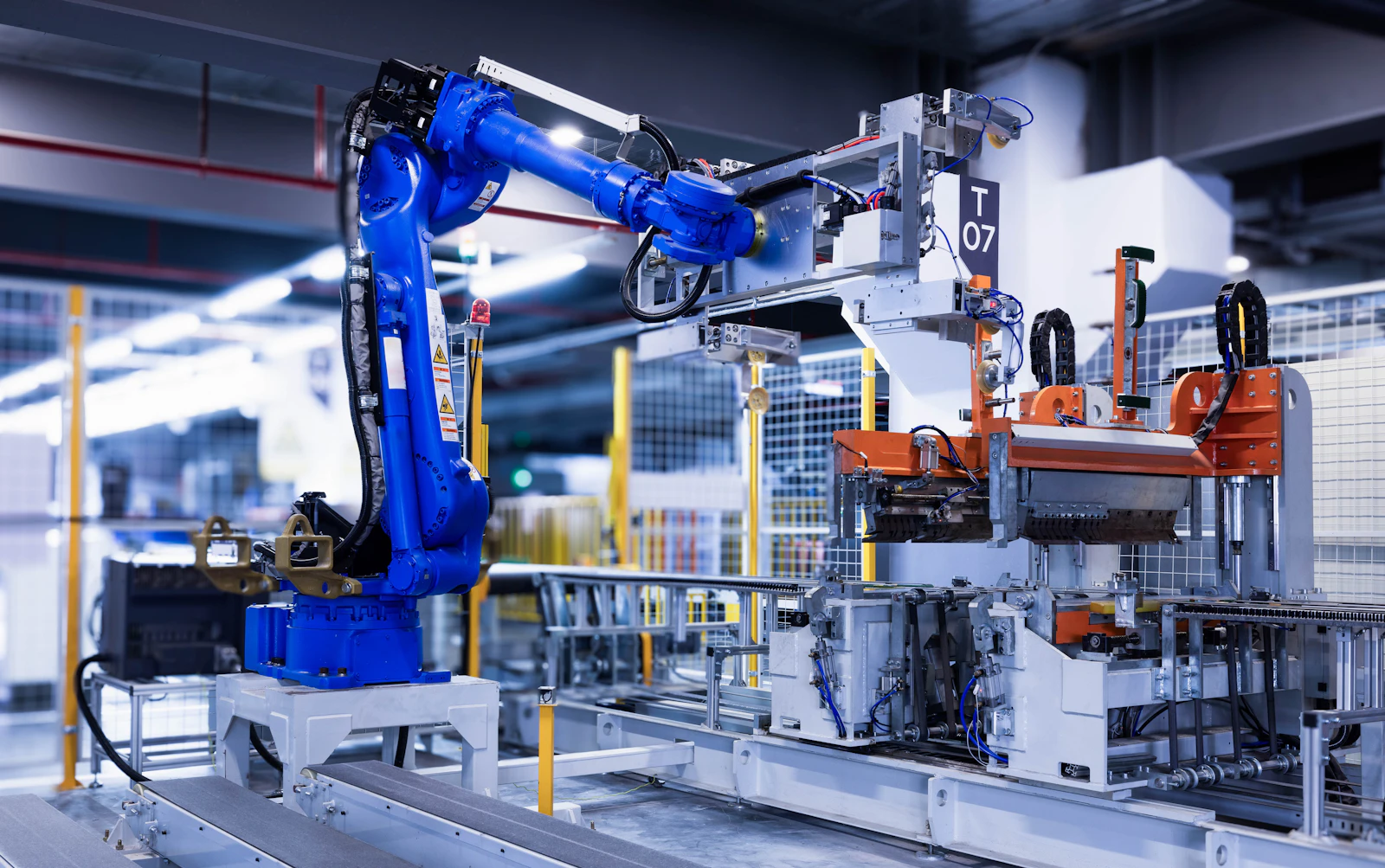
A blue industrial robot arm beside a production fixture.
Fixed cameraStable viewpoint and efficient repeated capture
Eye-in-handFlexible viewpoints and an expanded accessible scene
HybridUse fixed and robot-mounted imaging where justified

Direct answer

Is a fixed or robot-mounted camera better?

A fixed camera is often simpler for repeated inspection or guidance within one stable field of view. A robot-mounted camera can inspect several faces, move closer to small features or scan a wider work area. Cycle time, calibration, lighting, cable routing and maintenance determine the better architecture.

01 / Fixed camera

Keep image geometry stable and separate from robot motion

A fixed camera can capture while the robot completes another action, simplify cable routing and protect calibration from changing robot pose. It suits controlled inspection zones and conveyor tracking where the required scene remains visible.

  • Repeatable viewpoint and lighting
  • Potential parallel image capture and robot motion
  • Simpler enclosure and service routing
  • Known field of view and working distance
  • Multiple fixed cameras for opposing features where justified
02 / Eye-in-hand camera

Move the viewpoint to the feature

A robot-mounted camera can approach different faces, scan several positions or extend the useful view across bins, racks and complex parts. The design must account for robot accuracy, hand-eye calibration, motion settling, lighting and protected cable routing.

  • Multi-view inspection with one moving sensor
  • Close-up capture of small or recessed features
  • Expanded bin, rack or work-area coverage
  • Robot-guided search and re-observation
  • Calibration checks and serviceable dress packs

Side-by-side comparison

Match the method to the production constraint.

Use the comparison as a screening tool; the final architecture follows from representative products, timing and acceptance evidence.

Architecture comparison. The useful choice is the one that proves the complete cycle and acceptance criteria.
FactorFixed cameraRobot-mounted / eye-in-handDesign question
CoverageOne stable scene per cameraSeveral programmed viewpoints or a wider reachable areaHow many surfaces or locations must be seen?
CycleCan often capture independently of robot motionConsumes robot movement and settling timeCan imaging overlap another operation?
CalibrationStable camera-to-cell relationshipHand-eye relationship across robot posesWhat accuracy and revalidation are required?
LightingDedicated, shielded illumination is often straightforwardLighting may travel with the camera or vary by viewCan every view create controlled contrast?
MaintenanceAccessible fixed enclosure and cablesMoving cables, protective routing and robot accessHow will the system be cleaned, checked and serviced?

Decision pathway

Choose the arrangement from the image and cycle.

The decision should be made with representative products and a timing model, not from camera preference alone.

01

Map

List every required feature, surface and working distance.

02

Image

Prove focus, contrast and visibility for each viewpoint.

03

Time

Include motion, settling, exposure, processing and re-observation.

04

Maintain

Plan calibration checks, cleaning, cable routing and access.

Questions manufacturers ask

Clear answers before specification.

Use these answers to frame the first application review and the evidence needed next.

Can one robot-mounted camera replace several fixed cameras?

Sometimes, where the cycle allows the robot to visit every viewpoint and the moving camera can reproduce the required focus and lighting. Several fixed cameras may still be faster or simpler for simultaneous coverage.

Does eye-in-hand vision reduce accuracy?

Not inherently, but accuracy depends on robot repeatability, hand-eye calibration, working distance, optics, feature location and how calibration is checked across the work envelope.

Can a fixed camera track moving conveyor products?

Yes. A fixed camera can locate products and combine the result with encoder-based conveyor position so the robot intercepts the correct moving item.

Can fixed and robot-mounted cameras be combined?

Yes. A fixed camera may locate or identify the product while a robot-mounted camera performs close inspection or verifies a difficult secondary feature.

Start with the production evidence

Show us the production task and required outcome.

Use the project brief form, or email representative product images or video with the target output and required decision. We will define the next technical step.

Project brief