A specialist website by Oxford Industrial Automation

UK machine vision & robot integration · 01865 416830

Robot selection guide

Which robot is best for vision-guided sorting?

The right robot follows from the product, movement and production constraints. Compare delta, SCARA, six-axis and collaborative architectures before selecting a platform.

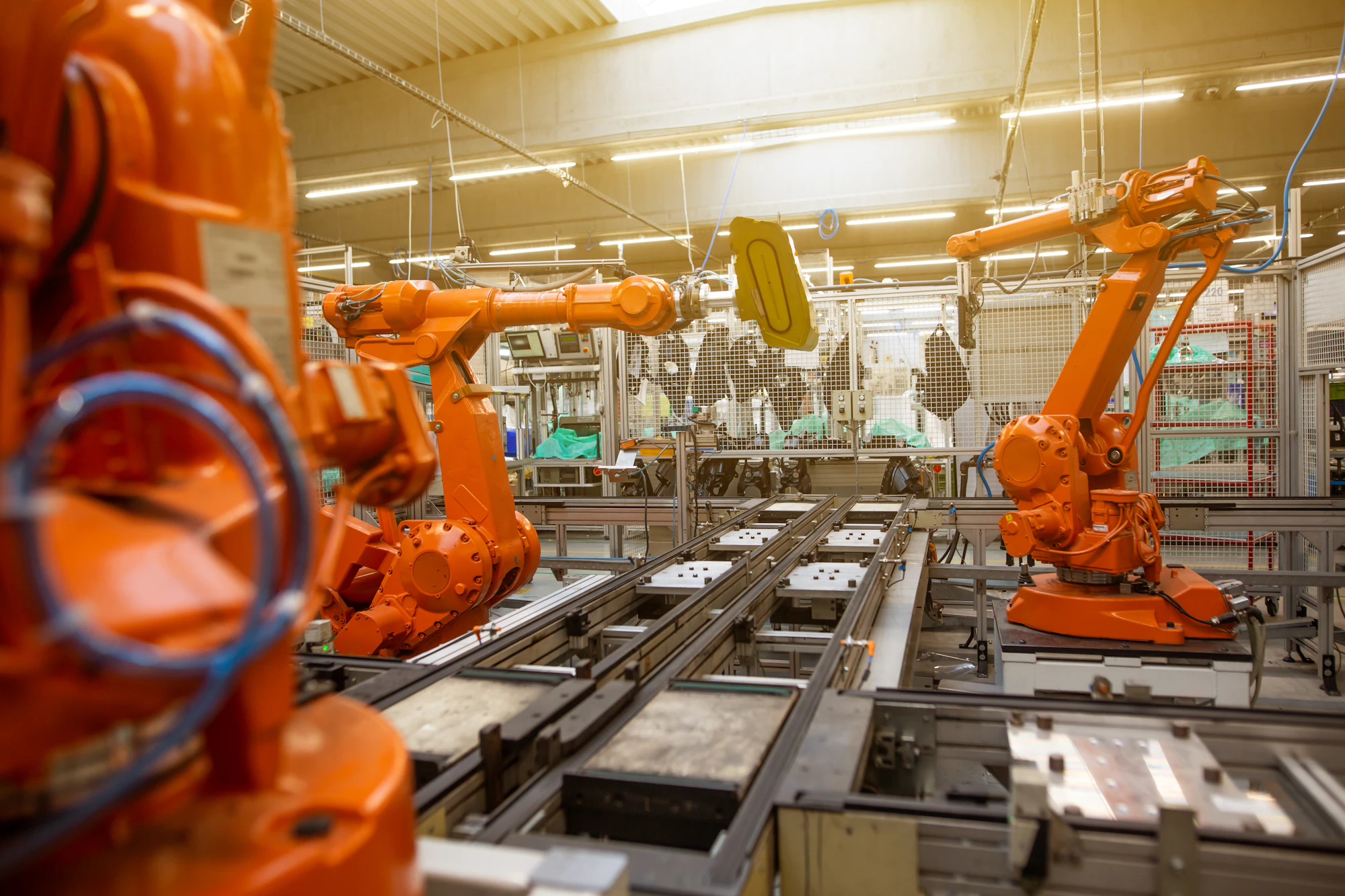
Orange industrial robot arms beside production equipment.
DeltaVery fast overhead picking for suitable light products
SCARACompact planar motion with controlled vertical placement
Six-axis / cobotFlexible pose, approach and viewpoint control

Direct answer

Which robot should be used for vision-guided sorting?

Delta robots often suit rapid conveyor picking; SCARA robots suit compact planar handling; six-axis robots suit complex orientation and approach; collaborative robots can suit flexible, lower-rate handling or inspection. Payload, reach, cycle, pose, tooling, environment and safeguarding determine the final choice.

01 / Define the motion

Start with the product journey

Write down where the product begins, the orientation information supplied by vision, every movement required and the acceptable destination pose. The robot must complete that journey with the gripper, payload and services attached.

  • Pick and place coordinates and orientation
  • Reach, vertical stroke and approach direction
  • Payload including tooling and services
  • Product fragility and allowable acceleration
  • Conveyor tracking or indexed presentation
02 / Prove the cycle

Headline robot speed is not line output

Image capture, processing, product travel, grip time, robot motion, release, confirmation and recovery all consume cycle time. Multi-pick tools or multiple robots may be more effective than selecting only by nominal axis speed.

  • Complete timing budget
  • Overlapping camera and robot operations
  • Missed-pick and no-product behaviour
  • Format change and recipe management
  • Cleaning, maintenance and operator access

Side-by-side comparison

Match the method to the production constraint.

Use the comparison as a screening tool; the final architecture follows from representative products, timing and acceptance evidence.

Application comparison. Final selection is confirmed against the actual product, cycle and cell risk assessment.
ArchitectureOften suitsStrengthsWatch points
Delta / parallelHigh-rate tracked-conveyor picking of suitable light productsFast overhead motion; small moving mass; strong pick-and-place fitPayload, work envelope, product control, overhead structure and hygiene detail
SCARACompact planar sorting, assembly, tray loading and machine feedingFast horizontal motion; rigid Z axis; efficient footprintLimited spatial orientation compared with six-axis; reach and vertical access
Six-axisComplex pose, machine tending, bin picking and multi-view inspectionFlexible approach and orientation; broad tooling and viewpoint optionsCycle time, singularities, floor space, guarding and cable routing
Collaborative robotFlexible high-mix handling or inspection where the application supports collaborationEase of redeployment; useful force and safety features; compact integrationCollaborative status depends on the complete application; speed, payload and risk assessment still apply

Decision pathway

Select the architecture from evidence.

A useful comparison connects every robot characteristic to an application requirement.

01

Product

Confirm dimensions, mass, surfaces, grip points and fragility.

02

Movement

Define reach, pose, approach, destination and tracking needs.

03

Cycle

Model every operation, confirmation and likely recovery.

04

Cell

Include tooling, services, guarding, access and changeover.

Questions manufacturers ask

Clear answers before specification.

Use these answers to frame the first application review and the evidence needed next.

Is a delta robot always fastest?

Delta robots can be very fast in suitable overhead pick-and-place applications, but line output also depends on image processing, product spacing, gripper time, placement, recovery and the usable work envelope.

When is SCARA better than six-axis?

SCARA can be efficient where movement is mainly horizontal with a controlled vertical stroke and limited orientation. Six-axis becomes valuable when the approach, tilt or destination pose is spatially complex.

Can a cobot run without guarding?

Not automatically. The complete application—including tooling, product, speed, forces, surrounding equipment and operating modes—must be risk assessed. Collaborative robot features do not make every cell fenceless.

Can several robots share one vision system?

Potentially. The design must manage calibration, work allocation, overlapping envelopes, product identity, conveyor position and what happens when one robot or camera is unavailable.

Start with the production evidence

Show us the production task and required outcome.

Use the project brief form, or email representative product images or video with the target output and required decision. We will define the next technical step.

Project brief