A specialist website by Oxford Industrial Automation

UK machine vision & robot integration · 01865 416830

Feasibility guide

Machine vision for difficult products

Reflective, transparent, very dark, deformable and naturally variable products are not one problem. Separate the imaging challenge from the inspection or guidance decision and test the worst credible conditions.

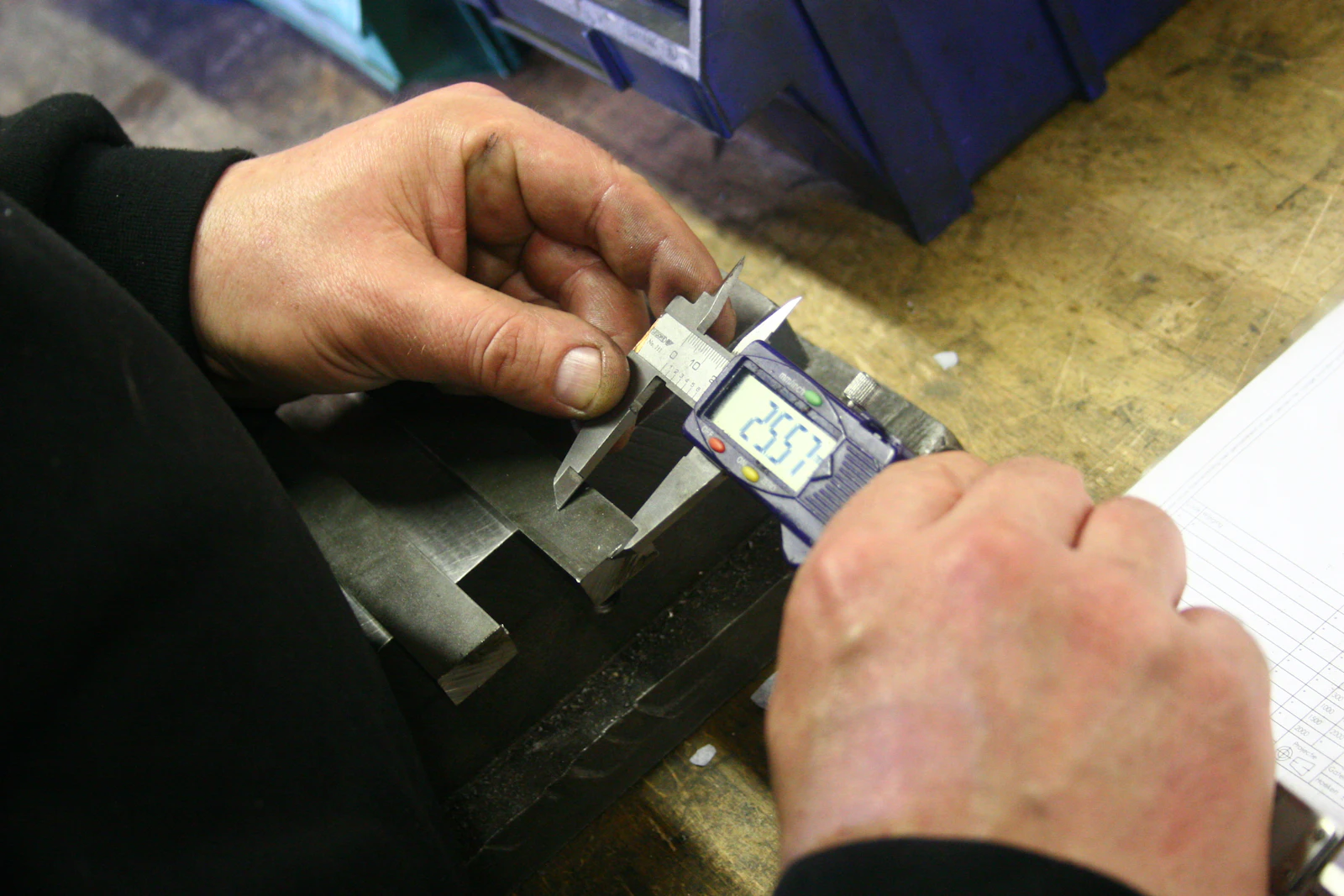
Hands using digital calipers on a metal component.

Manual inspection shown: representative trials establish whether the required feature can be automated.

SurfaceGloss, transparency, darkness and low contrast
PresentationOverlap, movement, deformation and changing background
EvidenceRepresentative samples under real production conditions

Direct answer

Can machine vision inspect reflective, transparent or black products?

Often, but the imaging method must reveal the required feature consistently. Lighting angle, wavelength, polarisation, background, optics, exposure and sometimes 3D or learned analysis are evaluated with representative samples. Feasibility should be proven rather than assumed.

01 / Surface and material

Create contrast before choosing the algorithm

A shiny surface can reflect the light source instead of revealing a feature; a clear product can show the background; a dark surface can return very little light. The solution may rely on geometry, diffusion, polarisation, backlighting or a different sensing method.

  • Diffuse and dome lighting for specular surfaces
  • Backlight for silhouette, edge and presence
  • Cross-polarisation to reduce selected glare
  • Bright-field or dark-field geometry for surface features
  • Wavelength and filter trials where the material response differs
02 / Real variation

Test the difficult production range, not one ideal part

Product finish, moisture, dust, temperature, supplier, batch, movement and ambient light can change the image. The trial set should include good, defective and borderline examples across those conditions.

  • Multiple batches, colours and finishes
  • Fastest speed and widest presentation range
  • Contamination, condensation or normal process residue
  • Worst-case overlap, deformation and orientation
  • Uncertain-result and operator-review policy

Side-by-side comparison

Match the method to the production constraint.

Use the comparison as a screening tool; the final architecture follows from representative products, timing and acceptance evidence.

Typical starting points only. The required feature and representative trial determine the final method.
ChallengeWhy it is difficultPossible engineering routesEvidence to provide
Reflective metal or filmGlare can hide edges, print or surface defectsDiffuse illumination, dark-field, polarisation, angle controlFinish range, scratches, curvature and production lighting
Transparent productBackground and internal reflections dominate the imageBacklight, controlled background, edge methods, specialised geometryMaterial, thickness, contents, bubbles and required defect
Black or absorbent surfaceLow returned signal and weak contrastHigher-efficiency lighting, wavelength trials, silhouette or 3DSurface texture, finish, temperature and smallest feature
Deformable or natural productShape and appearance vary within acceptable productRobust geometric features, AI where justified, explicit tolerance classesRepresentative good range, defects and borderline decisions
Overlapping or random partsFeatures and grasp points may be occluded3D scene capture, alternate views, presentation control, recoveryContainer, fill level, part interaction and required pick rate

Decision pathway

Turn uncertainty into a test plan.

A useful feasibility trial reproduces the image, timing and decision conditions that the production system will face.

01

Define

State the smallest feature and the required production response.

02

Collect

Provide the full good, defect and difficult variation range.

03

Trial

Test lighting, optics, presentation and processing at realistic speed.

04

Decide

Record proven limits, uncertainty handling and the next engineering step.

Questions manufacturers ask

Questions about difficult surfaces and variation.

Use these answers to frame the first application review and the evidence needed next.

Will a higher-resolution camera solve poor contrast?

Not by itself. More pixels cannot recover a feature that the lighting and optics do not make visible. Image geometry and contrast should be solved before resolution is increased.

Can AI remove the need for controlled lighting?

No. AI can help with complex visual variation, but lighting changes still alter the input data. Stable image acquisition remains important for validation and long-term performance.

How should difficult products be sampled?

Include different batches, suppliers, colours, finishes, speeds, orientations, contamination states, known defects and borderline cases—not only clean ideal products.

What happens if the system is uncertain?

The machine can route uncertainty to reject, review, alarm or line stop according to the risk. The response should be defined before acceptance testing.

Start with the production evidence

Show us the production task and required outcome.

Use the project brief form, or email representative product images or video with the target output and required decision. We will define the next technical step.

Project brief